7,89 €
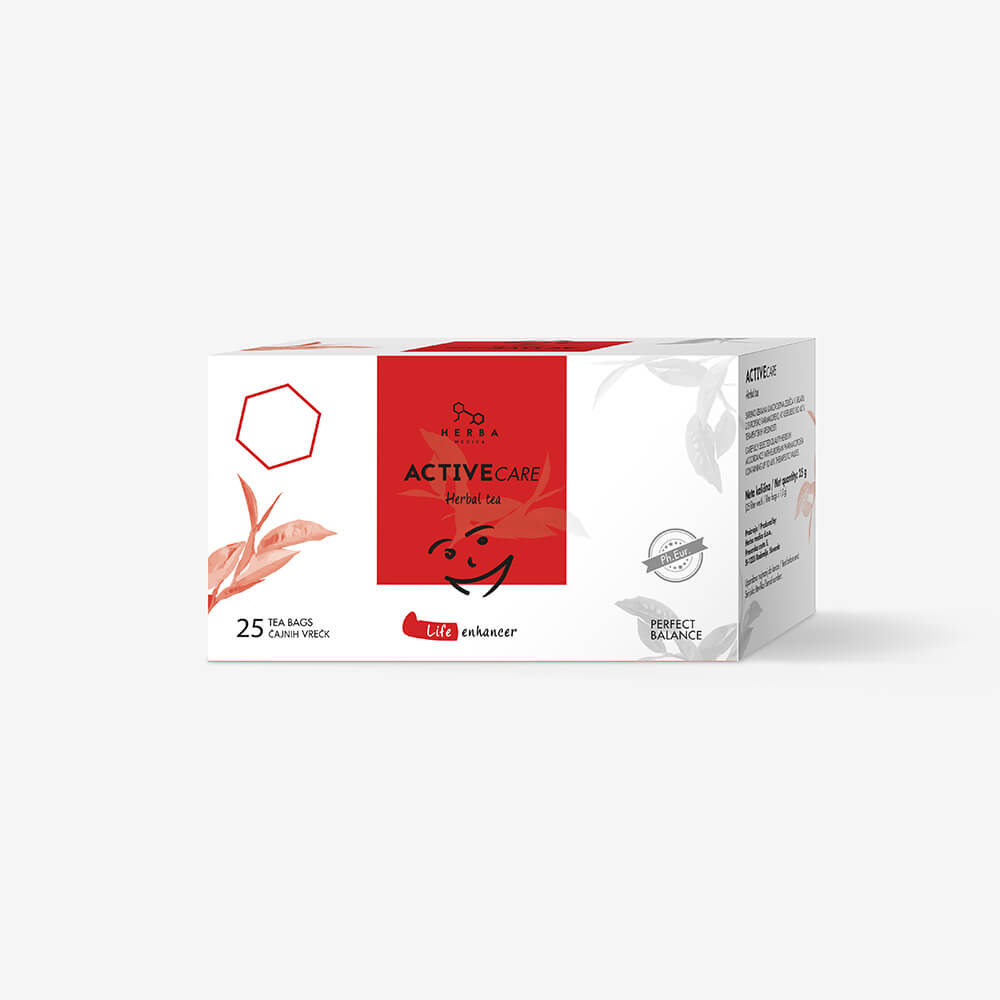
ACTIVECARE, high-quality tea with herbs from the European Pharmacopoeia that support your overall vitality.

ActiveCare tea is a herbal tea for a vital day.
Life Enhancer teas contain herbs of a very special kind. They are grown in accordance with and certified by the European Pharmacopoeia (Pharmacopoeia Europea).
This means that these herbs must meet strict standards in terms of quality, purity, and composition before they can be used in tea.
The ratings are based on the amount of essential oils, flavonoids, and polyphenols.
Each herb contains at least 40% therapeutic values.





ACTIVECARE tea is a herbal tea for vitality, made from rosehip, nettle, and hawthorn, designed to support energy, blood circulation, and overall well-being.
It contains herbs from the European Pharmacopoeia, rich in flavonoids and polyphenols, which help support normal blood circulation and daily vitality.
It is suitable for adults who want natural support for an active lifestyle, especially for energy balance, heart health, and healthy aging.
Pour hot water over one filter bag and let it steep for 5–10 minutes. Drink 1–2 times a day, preferably in the morning or early afternoon.
It is available on the official website of Herba Medica Slovenia. Delivery takes 3–5 business days, is free for orders over €75, and discounts are available for larger orders.
[1] EMS, T., ST LUCIA, K., HUECKER, M. R., Biochemistry: Iron Absorption, StatPearls, Treasure Island (2022). Iron Absorption and Its Role in Human Metabolism
[2] LEE, A. I., OKAM, M. M., Anemia in Pregnancy, Hematology/Oncology Clinics of North America, Vol. 25, Issue 2 (2011), pp. 241–259. Anemia in Pregnancy: The Role of Iron, Folate, and Vitamin B12 Deficiencies
[3] HAIDER, L. M., SCHWINGSHACKL, L., HOFFMANN, G., EKMEKCIOGLU, C., The Effect of Vegetarian Diets on Iron Status in Adults: A Systematic Review and Meta-Analysis, Critical Reviews in Food Science and Nutrition, Vol. 58, Issue 8 (2018), pp. 1359–1374. Iron and Ferritin Levels in Vegetarian and Vegan Adults
[4] WATANABE, F., Vitamin B12 Sources and Bioavailability, Experimental Biology and Medicine, Vol. 232, Issue 10 (2007), pp. 1266–1274. Vitamin B12 Sources and Bioavailability in Human Nutrition
[5] DAHLQUIST, D. T., STELLINGWERFF, T., DIETER, B. P., Effects of Macro- and Micronutrients on Exercise-Induced Hepcidin Response in Highly Trained Endurance Athletes, Applied Physiology, Nutrition and Metabolism, Vol. 42 (2017), pp. 1036–1043. Nutrient Effects on Hepcidin and Inflammation After Intense Exercise.
[6] SALIVE, M. E., CORNONI-HUNTLEY, J., GURALNIK, J. M., PHILLIPS, C. L., WALLACE, R. B., OSTFELD, A. M., et al., Anemia and Hemoglobin Levels in Older Persons: Relationship with Age, Gender, and Health Status, Journal of the American Geriatrics Society, Vol. 40 (1992), pp. 489–496. Age-Related Changes in Hemoglobin and Anemia in Older Adults
[7] HYDER, S. M., PERSSON, L. A., CHOWDHURY, A. M., EKSTRÖM, E. C., Do Side-Effects Reduce Compliance to Iron Supplementation? A Study of Daily- and Weekly-Dose Regimens in Pregnancy, Journal of Health, Population and Nutrition, Vol. 20, Issue 2 (2002), pp. 175–179. Compliance with Daily vs. Weekly Iron Supplementation in Pregnancy
[8] EKMEKCIOGLU, C., FEYERTAG, J., MARKTL, W., A Ferric Reductase Activity Is Found in Brush Border Membrane Vesicles Isolated from Caco-2 Cells, Journal of Nutrition, Vol. 126, Issue 9 (1996), pp. 2209–2217. Ferric Reductase Activity in Enterocyte Brush Border Membranes
[9] LÁZARO, E., SANTAS, J., RAFECAS, M., Recovery from Dietary Iron Deficiency Anaemia in Rats by the Intake of Microencapsulated Ferric Saccharate, Journal of Food Science and Technology, Vol. 54, Issue 9 (2017), pp. 2913–2918. Microencapsulated Ferric Saccharate for Improving Iron Deficiency Anemia.
[10] CONTRERAS, C., BARNUEVO, M. D., GUILLEN, I., LUQUE, A., LÁZARO, E., ESPADALER, J., LÓPEZ-ROMÁN, J., VILLEGAS, J. A., Comparative Study of the Oral Absorption of Microencapsulated Ferric Saccharate and Ferrous Sulfate in Humans, European Journal of Nutrition, Vol. 53 (2014), pp. 567–574. Postprandial Iron Response to Microencapsulated Ferric Saccharate